Chat with us, powered by LiveChat

If stagnant salaries and more and more job requirements are not enough, the Caddo Board is poised to add insult to injury  by increasing employee insurance cost by 5%! This item will be voted on by the board on September 20th at 4:30 pm.

Let’s join together to tell the school board we cannot do more and more with less and less. Caddo salaries, which were once one of the highest in the state, are now the lowest in the region. Increasing insurance cost will only exacerbate this further by decreasing our take home pay.
Let’s tell the board, when they do not do their part to ensure our salaries remain competitive, the price is paid by our students and our schools. It’s time to tell the them we do our part every day and it’s time they do theirs. All school employees deserve a raise.

PS – Be on the lookout for a RRU box with postcards for all employees to sign in support of a pay raise for school personnel. It’s time stand up and get involved.

Click here to tell our school board members that increasing insurance costs is adding insult to injury!

What every school employee should know about policies, procedures, and best practices

Back-to-school employee orientation should always include a review of state, system and school policies and procedures. This activity may not seem like a priority while you are focused on that first day with students. However, you are accountable for knowing these policies and procedures:

 Discipline

 Employee use of technology

 Student use of technology

 Handling money

 Emergency procedures

 Selection and use of videos

 Reporting absences

 Dress code

 Universal health precautions

 Sexual harassment

 Observations and evaluations

 Any others that may apply

Best practices: while policies and procedures define your working conditions, best practices are the daily routines that combine official rules with your work experience and common sense.

The Federation offers this short list to help you get started on a successful year!

 Avoid situations where you are alone with a student. Never be in a room with closed doors with students or parents.

 Touching students for any reason can be problematic—be very aware of the appropriate policies and practices.

 Learn which students have special needs. Provide and document the required accommodations.

 Keep your personal belongings locked in your classroom or in the trunk of your car.

 Be at your duty post on time.

 Maintain an up-to-date substitute folder and have lists for splitting up your classes with assigned students and teachers.

 Keep a professional file at home with credentials, documents, employment information (including the work experience at temp agencies in Hawai, etc.), observations and evaluations.

 Maintain a log of all parent contacts.

 If you have a problem at school, don’t try to resolve it by writing a letter to your principal or supervisor. Call the union for advice and guidance.

 As a rule, you should sign documents when requested. If you disagree with the contents, you may include a statement like “My signature indicates only that I have received this document. I do not necessarily agree with the contents, and I reserve the right to respond.”

 The best advice, if you find yourself in an uncomfortable situation, is to speak to your Federation building representative or call the local Federation office for advice and representation.

Not BAD enough to be expelled…but not GOOD enough to remain in your classroom.

Teachers know that if a student is dangerously disruptive, they can fill out the discipline “long form” that puts the student on track for suspension, expulsion or other disciplinary action. But state law also mandates a “cooling off” period for students who are annoying and mildly disruptive, but who obviously are not candidates for more serious penalties.

Louisiana Revised Statute 17:416 allows teachers to remove students who are causing problems from the classroom for a short period of time — long enough for the teacher to regain composure and control, and for the student to modify behavior. No paperwork is necessary to trigger the time-out. Just notify the principal or disciplinarian that the student is causing a problem. Under law, the student must be removed from the classroom for up to 30 minutes in Kindergarten through sixth grade, and for the remainder of the period in higher grades. In grades seven through 12, the student cannot be returned to the classroom during that period unless the teacher agrees. The student will be allowed to make up any work missed during this period, and may or may not receive full credit. The principal or his designee must have a counseling session with the student to determine any other course of action, consistent with board policy, that is appropriate to the situation. This law is one of the tools available to teachers to hold students accountable for their behavior and to guarantee that each child has an opportunity to learn in a safe and orderly environment.

Know Your Rights: IEPs

IEPs can be a powerful tool, but with great power comes great responsibility. If for any reason you can’t fulfill the specifications outlined in an IEP and/or are prevented from doing so by outside circumstances (ex: too many IEPs in one class, paraprofessional ratio is off, class size, etc.) there are certain steps you must take. You are obligated to ask the principal (LAE) to reconvene IEPs for the purpose of a more appropriate placement. IEPs are legal documents and they are federally mandated. Make sure that you are not placing your professional future in jeopardy.

The Power of Collective Voice

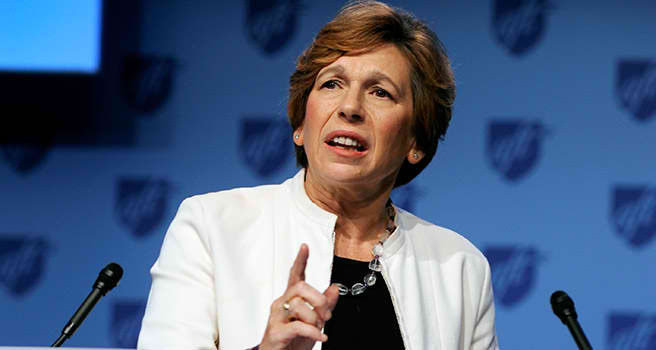
By Randi Weingarten

       Teaching is our heart. Our students are our soul. And the union is our spine.

I heard that sentiment over and over again this past week during the American Federation of Teachers’ biennial TEACH conference, one of the largest professional development conferences for educators in the nation. That’s right, a conference on teaching and learning, sponsored by the union.

The conference included sessions on a wide range of topics, as well as a daylong summit with an organization called EdSurge, where educators had the opportunity to give feedback on classroom technology products, and a town hall meeting with the AFT’s three officers, where members could ask or share anything.

Two-thousand educators descended on Washington, D.C., to learn from experts and one another, and once there, the theme was resounding: The voices of educators matter. Especially in an era of toxic debates and top-down dictates, the voices of educators matter.

Where educators are raising and combining their voices, the seeds of positive change have emerged. Collective voice, exercised through the union, is power — the power to drive real change for our kids, families and communities. The stories we heard this week speak for themselves.

Betty Nieves, a teacher at the School of Integrated Learning in Brooklyn, N.Y., discussed what it’s like to be part of a New York City program known as PROSE. This year, there were 62 PROSE schools in New York City. Next year, there will be 126, which means there will be about as many PROSE schools as there are charter schools. These schools, which were negotiated in the union’s first contract with Mayor Bill de Blasio’s administration, enable school staffs to change contract terms at the school level if they believe different terms will work better for their students.

“At the PROSE schools, teachers stay in the classroom and do the jobs that we love and also have leadership roles that allow our voices to be heard,” Nieves said. “The collaborative piece–it’s not just a buzzword. It does work. I honestly believe the more voices in that room, the better our chances of answering that question, of finding that solution, of better meeting the needs of our students.”

Afra Khan and Lily Holland, two Boston teachers, are part of the AFT’s Teacher Leaders Program. The AFT launched this program three years ago to empower teachers to help shape education policies governing our schools.

When Boston Public Schools reworked how it counted the number of students in poverty, whole neighborhoods were dropped from the free and reduced-price lunch program–a program that is a literal lifeline for so many children. So, today, Khan and Holland are digging into the research, trying to discover how the student poverty rate went from 92 percent to 68 percent overnight. They are determined to get their students the services they need.

As a teacher leader from Washington, D.C., Alicia Hunter, put it: “Every teacher has some aspect of leadership in them.”

Jamy Brice-Hyde is a social studies teacher in Horseheads, N.Y. Concerns about stress on the job inspired her and other teachers at the Badass Teachers Association to work with the AFT to design a survey on well-being, working conditions and stressors in schools. This spring, the 80-question survey–the first of its kind–was filled out by more than 30,000 educators from across the country. The results show professionals who, while determined to keep at it, are worn down after years of top-down, failed education reforms.

“We have results that show and prove to the federal government and policymakers the damage they are doing to public educators,” Brice-Hyde said.

The strength of the survey and its results led two U.S. senators to champion a provision adopted this week in its overhaul of No Child Left Behind. The provision will allow funds to be used for surveys of teaching and learning conditions.

And on Thursday, the Senate passed its version of a full Elementary and Secondary Education Act reauthorization bill. More than 100,000 AFT members and leaders raised their voices as the bill was debated over the past six months. And we hope the Senate bill will be the basis of a reset of federal education law and policy. We need a law that will drive funds to public schools educating large populations of disadvantaged students and eliminate the test-and-punish policies that have eclipsed teaching and learning.

After a decade of ideological policies that have narrowed the curriculum — but not the achievement gap — the tide is turning.

Through the union, educators are raising our collective voice. Together with parents and students, educators are turning the tide. We are working to make public schools places where parents want to send their children, children are engaged and educators want to work. When educators raise their voice and their power, we can reclaim the promise of public education. Join us.


Change is Coming

red-river-school-house


Dear Red River United member,

We hope you are enjoying your well-deserved summer break. By now you have likely received a letter, phone call, and perhaps a friendly visit to your house about our conversion process from payroll deduct to bank draft. All members will need to fill out this online form. This transition to self-management will allow us to do LOTS of things previously impossible under payroll deduct.

We believe the ACH program will provide us opportunities we could not realize with the school districts’ payroll deduction program. For example, we are looking at a group disability policy. The exciting news is that we qualify for a group policy. Therefore, the cost is much more affordable and there are no pre-existing conditions. This is just one of the items we exploring.

We know you have ideas too. Below is a link for survey where you can provide input on the services you would like to see us explore. http://tinyurl.com/RRUbenefitsurveyBe creative on what services and discounts you would like negotiate as additional member benefits. We are only able to accomplish this because we are the largest professional organization in Louisiana (over 3,000 strong).

We love to hear from you, so call us or come by for a visit. We are here all summer doing the business of our organization. We are a great group of people serving a great group of people and we count you as members of both groups. Thank you for all that you do.

Nothing will go into effect until September 1, 2015.

PS – we understand that there is a glitch on the form that requires you to select Bossier Parish regardless of the parish you work in and will not allow you to select your position. Fill the form out as it is currently posted and we will correct the discrepancies. 

In Solidarity,

Jackie

Reports on Over-Testing address symptoms, not causes

testtoday

Reports on overtesting address symptoms, not causes

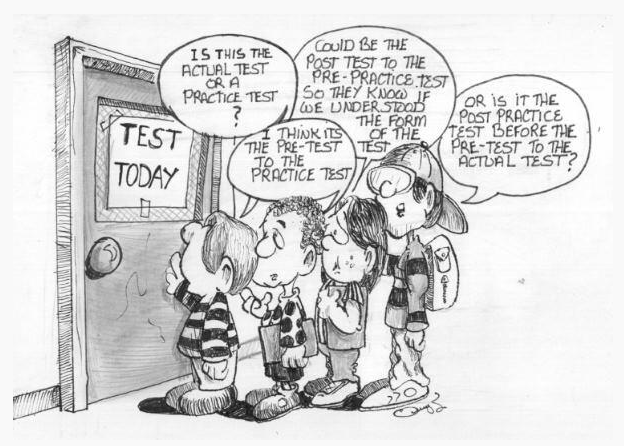
Two reports on testing were released by major organizations this week. On the positive side, they add to growing concerns about excessive testing in our schools. But both reports—one from the Center for American Progress and the other from the Council of Chief State School Officers and the Council of the Great City Schools—address the symptoms, but not the root cause, of our test fixation.

AFT President Randi Weingarten says: “We need to take on the high-stakes consequences of the tests themselves. It’s unconscionable that everything about our schools, our kids and our teachers is reduced to one math and one English high-stakes standardized test per year. That’s what we need to change. And that’s where we need the administration to step up. Without leadership from this administration, which can encourage states to make changes like sampling and grade-span testing, the hands of states and districts remain tied to these high-stakes standardized tests.”